Showing posts with label assessing. Show all posts

Saturday, December 8, 2012

Those Tricky Conversations

As a parent, I now realise more than ever before, how much a parent wants to hear that their child is doing well with their education. And also, how very much they fear hearing that their child is NOT doing well. Parents generally don't know what is considered 'normal' for their child's age, and thus rely on their child's educator to inform them of any concerns. While I'm sure we all recognise our children's individuality, we still want to ensure that we are providing them with a good start to life and the opportunities that will lead to their success. 

I have been aware of this with my own little boy. He has now turned two and seems to be doing fairly well for his age. How do I know this? Through comparisons! I look at other children of a similar age to gauge his development and I monitor his progress by looking at Early Childhood Development resources such as these:
That said, however, I'm still thrown when my Family Day Care Provider mentions that my little one confused sinking and floating when talking about some objects during water play. My logical side tells me: "She is telling me this as it is an area that she has discovered that he is interested in, and that she can work on with him. Besides, sinking and floating is something that will come up continually through both life experience and education. There is no need to be concerned." But my not-so-logical side tells me: "Aaaah! There's something my little boy doesn't already know that has come to his educator's attention. She must think he should know this already! What else have I failed to teach him." RIDICULOUS!

Which brings me back to the title for this post - those tricky conversations. Unfortunately, part of a teacher's responsibility is to inform parents of the areas their child is struggling with, and to provide some suggestions for how to improve. And, whilst we try to do this throughout the year, as the issues come to light, the bulk of this information becomes evident when we collate the assessment results for the term/semester to write reports and allocate grades. 

At my school, Semester 2 reports go home during the last week of the school year. Given the process, it would be difficult to send them out any earlier. Final assessments are made in the first five weeks of term. Reports are then written and proof-read a number of times before printing and signing by the class teacher and principal. This then allows parents to read through the reports and contact the school about any questions they may have. In order to prevent issues after the reports have been sent out, teachers are encouraged to contact parents in advance so that there are 'no surprises'. This generally translates to: Contact any parent whose child will be receiving a D grade. But this year I also included students who had dropped a grade in two or more subjects. I dread these phone calls. 

This year I have worked quite closely with the students receiving D grades, and I know that they have been trying really hard, and also that they have made progress. But then, when I look at the whole year cohort, it is quite clear that they are not all performing at the same level. How do you explain to a parent, that despite their child's best efforts, they still don't understand the concepts well enough? They still struggle to perform at the standard for their grade level. What is worse is that for some of these students, their lag is such that they may be chasing the tail of the rest of the cohort for the whole of their schooling. And then, how do you explain that holding them back a year may not actually be in their best interest either. Parents just want to know the answers. They blame themselves for their child's struggles and just want to make it right. But there are no easy answers. I hate those tricky conversations.

Tuesday, March 31, 2009

Tech Tips Tuesday

This Week's Tip: Making the Most of Dictionaries

I've been marking English books this week, and as any teacher knows, the more you look at misspelled words the more confused you become about correct spelling. Paired with that, I am trying to encourage my students to use more sophisticated words in their writing. I've found the free Dictionare on my iPhone to be quite handy in dealing with this quickly. iPhones seem to be the gadget to replace all gadgets these days, so if you have one, I'd recommend grabbing a free dictionary app for the purpose of spell checks. I've recently downloaded iThesaurus as well for all my synonym needs! Just for fun, I downloaded Word Twiddle (for $2.49) which will allow me to play with words a bit. This might make for a bit of fun with my literacy class, or at least get me thinking a bit more about the wonderful world of words.

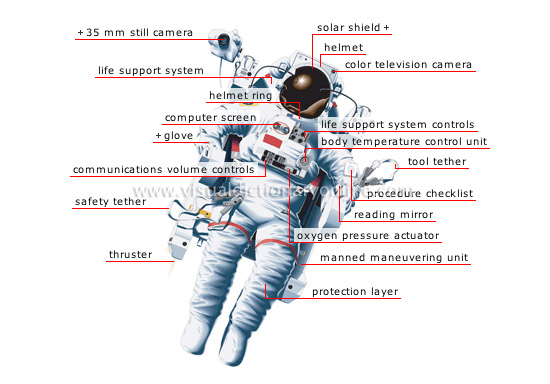
For those of you who don't have iPhones (yet), I also came across a great visual dictionary that I imagine will be great for teaching visual literacy. Think online-multi-themed-picture-dictionary-with-cutaway-images. The Merriam-Webster Visual Dictionary Online covers a number of themes from 'astronomy' to 'sports and games' and images can be embedded in blogs/websites. It also posts a weekly game for students which involves putting the labels in the right places. Thanks to Dominic P. Tremblay from Resources for Teachers for the tip about this resource. NSW teachers who are focusing on transport this term should definitely check out this resource for the relevant pages in the 'transport and machinery' pages. Here's a sample of the types of images available. I've chosen a spacesuit because my class will be investigating space exploration later in the year.

spacesuit - Visual Dictionary Online

Saturday, November 8, 2008

Working as a Team

Last week went by so quickly that I hardly had time to blink. It was a funny week - with the Alpha Show on Monday, and then Melbourne Cup Day on Tuesday. I struggled to get onto the computer at all, with most of my work focused around assessing, marking work, and then moderating with the other year 1 teachers. I'm really pleased with the end result. We have a fair and consistent approach that is backed by evidence.

We year 1 teachers, spent most of Tuesday together doing the moderating. It was a fun day, and we got to know each other a lot better while we waded through all the work. We were a lot more productive than any of us would have been alone. That's the great thing about this year 1 team - we work so efficiently together.

I'm not really sure what the recipe for success is when working in teams, but this team has it. We all started at the school this year, so knew very little about 'how things are done' at the school. In a lot of ways I think this helped us to bond together. We shared frustrations when we found out we had been doing things 'wrong' or had completely 'forgotten' to do something.

We've worked our way through the year together, improving things as we go and making things that little bit more efficient each time. We've already started planning how we can do things differently next year. It's rewarding to see how we have progressed.

Right now we are excited about the new unit of work we have just started. We keep coming up with extra ideas to make the learning even more fun. But that's the next post...

Tuesday, October 28, 2008

The Challenge of Assessment

While teachers are continually assessing students throughout the year - marking books, observing students at work, monitoring through quizzes - there are key times when student progress needs to be reported on and teachers are met by the challenge of providing tasks that will accurately determine student learning and performance.

When facing this challenge, there are many things to take into consideration. Below are some of the things that I work through when planning this type of assessment.

Timing
It can be difficult to get the timing right with assessment. I want my students to have the best chance of achieving the material, but also need to prepare the reports by about mid-term. This means that most of the final assessment needs to take place early in the term - before I get a chance to review the material with my students one last time. I develop an assessment schedule to help me plan out how I will gather the appropriate information in the remaining time.

Differentiation
In part due to the timing, but mostly due to the differences in learning styles, it is helpful to give students opportunities to show their learning through different means. Some children may like to complete a written test, others would prefer to demonstrate their learning, or present it orally.

More than one sample
This next consideration is related to the last. As much as possible, it is useful to have more than one sample that is used to determine a grade. For example: A handwriting textbook is great for showing how a student performs in formal handwriting lessons, however it is worthwhile to also consider how this translates to their writing in other curriculum areas as well.

Scope of Assessment Items
When developing a piece of assessment it is important to provide scope for students of differing abilities. My assessment task cannot only test for the outcomes that I taught toward. I need to include parts for students of lower ability and parts that will challenge students with greater ability.
For example, when testing for year 1 Maths outcomes, I use questions relating to Kindergarten outcomes, Year 1 outcomes and Year 2 outcomes. If students can only answer the Kindergarten outcomes, they are performing at an E level. If they can answer K and 1 outcomes, they are performing at a C level. If they can answer all questions, they are performing at an A level. Students who achieve a C level have been successful at meeting the grade standards.
Sometimes I find a test will be too easy and won't give an accurate spread of students. When this happens, I use other work samples or assessment items to assist my decision.

Rubrics
Developing rubrics may be time consuming as I prepare my assessment schedule, however it saves me time in the long run and helps me to become more objective when comparing students across the class or grade level. When I am moderating with other teachers, a rubric will help with consistency in marking.

Moderation
Communication is important when preparing assessment and reports. Teachers of the same grade level can talk about their opinions of grades and discuss what they see when they look at a piece of work. I often find that one teacher will notice something valuable about a piece that I may have overlooked. The insight of others helps me to make more thorough judgements.

Acceptance!
Perhaps one of the biggest challenges I find with assessment and reporting is acceptance. At the end of the year I feel confronted by my failures. Despite all the work that I've put into my teaching throughout the year, I never feel that I've quite done enough. During moderation I will see that some students in another teacher's class have achieved a higher standard in some areas of the curriculum and I'll begin to second guess my own methods. I'll be frustrated, particularly when I realise that there is so little time left in the year to 'fix things'.
I think that somehow (stupidly) I feel that I am the last chance for this child - that if they haven't learnt everything by the end of the year, they will never learn it - which of course is false. As I head into this time, I need to accept that I have done my best for my class. I need to accept that I cannot control everything in my classroom all of the time. (Some of it comes down to the kids' personalities, interests and abilities as well!!!) And, I need to honestly reflect on my achievements through the year. There will be things that I can try to do differently next year - there always is - but there are also some great things that were done in this year.

Let me know what you see as the biggest challenges with assessment.