Tuesday, March 31, 2009

Tech Tips Tuesday

This Week's Tip: Making the Most of Dictionaries

I've been marking English books this week, and as any teacher knows, the more you look at misspelled words the more confused you become about correct spelling. Paired with that, I am trying to encourage my students to use more sophisticated words in their writing. I've found the free Dictionare on my iPhone to be quite handy in dealing with this quickly. iPhones seem to be the gadget to replace all gadgets these days, so if you have one, I'd recommend grabbing a free dictionary app for the purpose of spell checks. I've recently downloaded iThesaurus as well for all my synonym needs! Just for fun, I downloaded Word Twiddle (for $2.49) which will allow me to play with words a bit. This might make for a bit of fun with my literacy class, or at least get me thinking a bit more about the wonderful world of words.

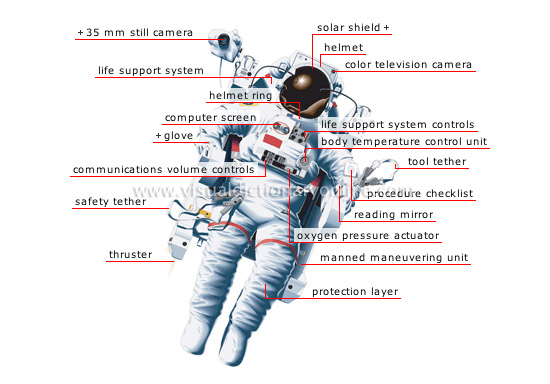
For those of you who don't have iPhones (yet), I also came across a great visual dictionary that I imagine will be great for teaching visual literacy. Think online-multi-themed-picture-dictionary-with-cutaway-images. The Merriam-Webster Visual Dictionary Online covers a number of themes from 'astronomy' to 'sports and games' and images can be embedded in blogs/websites. It also posts a weekly game for students which involves putting the labels in the right places. Thanks to Dominic P. Tremblay from Resources for Teachers for the tip about this resource. NSW teachers who are focusing on transport this term should definitely check out this resource for the relevant pages in the 'transport and machinery' pages. Here's a sample of the types of images available. I've chosen a spacesuit because my class will be investigating space exploration later in the year.

spacesuit - Visual Dictionary Online

Saturday, March 28, 2009

Thoughts on Globalisation

I am currently undertaking a Graduate Certificate in Educational Leadership. We have been reading about globalisation and I thought I would share my ideas with readers here as well as my colleagues.

In Chapter 12 of Education, Change and Society, Nigel Bagnall defines globalisation and addresses some of the impacts of globalisation on power, culture and the economy. He prompts us to consider implications for education. He mentions the "shrinking of the world as technology and the travel industry make it possible to be physically anywhere in a short period of time, and virtually anywhere anytime". He also shares two interviews with Australian teachers who were trained in Australia but were teaching in countries outside of Australia.

I have personally experienced this "shrinking of the world". I have many friends who taught in the UK, one who taught in Tanzania, and I too taught overseas. While I never planned to travel with my teaching, in 2006 I found myself searching for teaching jobs in New York City. Having returned from a 17-day holiday in the USA (4 days of which were in New York City), my husband suggested that we spend a year living in New York City. Thinking this was a throw-away line, I ignored it. But as time passed, our interest in New York grew, and I realised that there would be no ignoring it.

I began to investigate the process online and found that because of (but not part of) the USA-Australia Free Trade Agreement made between our government and the US government, Australians have access to a special working visa (E3). The difficulty behind this visa is that you need to have been offered a job prior to obtaining the visa. Impossibility at one point in time, but now made possible through the use of the internet. I used Craig's List and the New York Times Online to search for jobs in New York City.

More internet research ensued. I began taking digital workshops through the PAEC Teacher to Teacher Initiative. Through these workshops I developed a greater understanding of the latest ideas in teaching in the USA. I began applying some of these ideas to my own teaching in Australia. Even specific courses required to teach in New York government schools could be taken online. Unfortunately, at the time, I found it too difficult to apply for government schools as I was required to sit exams (two months apart) in New York City prior to beginning. From what I understand, this requirement has since changed.

I changed my search to private schools and used Go City Kids to search for and contact schools. After quite some time, I found a school that was interested in exploring things further. After a phone interview and many more documents sent via email, I was offered a position and my journey began.

My husband used online resources to find us an apartment. We checked out reviews on different areas and could see locations using Google Earth. By the time we actually arrived we had everything lined up and had quite a good idea of what we were walking into, having only previously spent 4 days in the city!

I taught kindergarten in a private school with a Classical Christian Education philosophy. We were located just two blocks south of Central Park. (You can read more about the adventure at New York, New York.) Whilst teaching at this school I stuck very closely to their curriculum and was amazed by what my students could achieve from this structured format. It gave me new insight into the capabilities of young children.

Now back in Australia, I try to combine the best of both worlds. I continue to access online resources from around the world to develop my skills and strategies. I connect with other teachers - both in Australia and beyond - through social networking tools. Through these communities we discuss and explore ideas relating to education and share strategies to enhance our teaching.

Globalisation has opened new doors and experiences to me that previously wouldn't have been possible. While I agree that not all aspects of globalisation are beneficial and that there is not equal distribution of the benefits, I feel that my life has been changed for the better through this experience as has the education of my students.

Literacy Unit - Rowan of Rin #6

We are working through the book Rowan of Rin by Emily Rodda. Last week we read the last three chapters and began discussing the book as a whole. For an overview of activities in earlier chapters please use these links:
Chapters 1 and 2
Chapters 3 and 4
Chapters 5 and 6
Chapters 7 and 8
Chapters 9 and 10

Summary - Chapters 11-13
Rowan, Marlie and Strong Jonn come to two tunnels and must decide which one to follow. They decide to check them both out. The one on the right gets very tight, so they try the one on the left. But the one on the left ends in a steep slide down an underground cliff. They take the tunnel on the right, but first eat and leave their packs behind, as with them, they cannot crawl through the tunnel. Having filled their pockets with the things they will need, Marlie leads the way. However, Marlie is terrified of enclosed spaces and seconds after entering she is pulled screaming from the tunnel. Marlie decides to turn back and catch up with Allun. Strong Jonn suggests that Rowan should also return, but Rowan insists that he will stay.

Rowan and Strong Jonn squeeze their way through the tunnel, occupying their minds with other thoughts to avoid the fear and anxiety building within them. They are relieved to finally make their way out of the tunnel and take a moment to recover at the top. Unfortunately, Strong Jonn is struggling for his life. The tunnel has scratched his body badly and he fears that he cannot go on. He urges Rowan to hurry home to his mother and abandon the journey. Rowan, however, decides to stay with Strong Jonn. He builds a shelter and fire and the two drift off to sleep.

The next morning Rowan and Strong Jonn continue the journey up the mountain. They meet the dragon who traps Strong Jonn against the wall with its tail. Rowan realises that it's all up to him. He also realises that the dragon is in pain. He speaks to it in the tone he uses with the bukshah when they are in pain. He determines that there is a bone lodged in the dragon's mouth and he reaches in to gently remove the bone for the dragon. The bone is removed and the pain subsides. While grateful to Rowan for his help, the dragon is now hungry and turns to Strong Jonn. Rowan remembers the final part of Sheba's verse and throws the compass at the sore part of the dragon's neck. The dragon yelps in pain and releases his tail just long enough for Rowan and Strong Jonn to escape.

A burst of fire blasts from the dragon's mouth, melting the ice around Strong Jonn and Rowan. The ice turns to water and suddenly they are caught up in an underground stream tunneling through the mountain. This is the stream that had stopped flowing in Rin. They ride the stream all the way back through to Rin where Star greets them and carries them the remainder of the way. The village is pleased to see them and surprised to hear how the "skinny rabbit" persisted with the journey and faced the dragon. The stream flows again and Rin is safe.

Activities

Code Breaker
  • Find examples of possessive pronouns in the text.

Text Participant
  • In groups of three, students act out Rowan and his conscience in determining whether to face the dragon. One plays the role of Rowan, one is his fear and one is his bravery. The person playing fear tries to convince him to leave the mountain and go home. The person playing his bravery tries to convince him to face the dragon and save the people of Rin. (This can work with groups of 5 as well. We then repeated the activity as a whole class with each person putting forth an argument. It was great to see what each person added to the argument. One group was particularly creative with their role play and asked to share it with the class. The fear and bravery actors jumped up into the scene with a "POOF". I recorded it, but to protect identities can't publish it here.)
  • Students also create the final interview video for their character. This time they choose their own interview questions and answers.
Text User
  • Students create a plot profile of the book - writing a one line description of each chapter and graphing each chapter for level of excitement (1 being calm, 10 being exciting). They compare and discuss their profile with others and see that others perceived the text differently so there is no 'right' answer.
  • Students use their plot profile to assist them as they write a Newspaper Report of the journey. They consider the most important and exciting parts to mention.
Text Analyst
  • Reread and discuss Strong Jonn's comments to Rowan about his bravery. How does this tie in with students' own ideas of what it means to be brave?

Here is the complete Rowan of Rin unit.

Friday, March 27, 2009

Friday Fun - 27/3/09

Fun this week:

Maths
After all the difficulties with teaching subtraction with trading last week, I couldn't simply move on and ignore it. It was eating away at me. I had to conquer it. So this week, rather than moving on to multiplication and division, I spent some more time on subtraction. I found some great videos on subtraction with regrouping and played these for the class.


We then used the rhyme "If there's more on the floor, then go next door" to help us solve a range of two digit subtraction questions. This also helped with explaining the more difficult subtractions from 2000 etc. The rhyme can be applied by the first neighbour saying "I'm sorry, I don't have any numbers to spare. Let's try next door" and so on. I think my students really enjoyed the idea of the numbers being characters and fitting into a story!

My new challenge is to help my students to look at the question first before flying into the written solution. Too many were using the written method to find the answer to 50 - 49 which I know they can do mentally!

We also touched a little on multiplication and division (as I didn't want to overlook it completely) by reviewing some one-digit multiplication and creating the "families" for those facts. For example, 5x7=35; 7x5=35; 35 divided by 7=5; 35 divided by 5=7. Again, my students loved this idea of the numbers being in families. I'll have to remember this as I teach them other concepts - they like to bring the numbers to life!

Spiders in Spider Webs
This relates to our Rowan of Rin unit, but we did it in our homeclasses, so I've decided to include it in Friday Fun. We listened again to the passage in chapter 6 of Rowan of Rin where the characters face thick spiderwebs covered in big, black spiders. We used white oil pastels on black paper to create a web background. We then created our own spiders from shiny black paper and stuck them on the background so that they stood on the page with bent legs. We made the web sparkle in some places using some silver glitter paint. They look really fantastic displayed in our classroom.
Jonno and I were chatting about how great they were and that chatting lead to more ideas and so we decided it would be good to teach the kids how to write a description about spiders and spider webs and then attach their writing under their artwork on the display. We brainstormed some good adjectives and then students created sentences using these words. I suggested that they try some alliteration and rhyme but use no more than three adjectives per sentence. The writing that resulted was really fantastic. One of my students then suggested that we type up these descriptions in our lab lesson rather than handwriting the final copy. Brilliant idea - and a brilliant opportunity to teach some simple word processing tips - changing the page orientation, selecting all text, changing font etc. This lesson was also great for teaching the correct use of commas.

Communication - Assessment Task
As part of our Integrated Inquiry this term, we want our students to learn how to communicate effectively with others through a variety of forms. In groups, students selected a type of communication: phone calls, email, letters, postcards, cards, face-to-face, blogs, SuperClubsPlus webpages. In these groups they needed to consider the purpose for this communication (including advantages and disadvantages), the conventions and tips to effective communication with this form. They then needed to decide on the best way to present this information clearly to their peers - all while cooperating with others in their group.
Students had most of Friday to work on this, but still need a little more time to fine tune their presentations. They have been working very well together and have been learning a lot both about and through communication.

Description
Both literacy classes did some descriptive writing this week using some ideas we obtained through PD last week. I found this picture of a soldier with a kitten. Students began with the sentence "[Name] is a soldier." They then wrote a description of his clothes, his face and the kitten in his arms. After this, students wrote a flashback to tell the story of how the kitten came to be in the soldier's possession. Linking the flashback to the description was pretty tricky for most students and didn't come naturally. This is something for us to work on in future lessons.

Earth Hour
On Friday our school turned off all electrical power between 11am and 12pm in recognition of Earth Hour. We tried to continue with lessons as much as possible. In Year 4 students wrote in their reflective journals and moved to spaces in the room with greater natural light.

Walk-through of Cross Country
Our Cross Country carnival is two weeks away so on Wednesday we walked the course that students will run - just to make sure they know where they will be going. The next day some of the students were complaining about how their muscles were sore from walking the track. Looks like we have some training to do before the big day!

Rowan of Rin
For information about what we learnt in our unit of work on Rowan of Rin by Emily Rodda, click here.

Tuesday, March 24, 2009

Tech Tips Tuesday


This week's tip: Tools for teaching Math(s)

This week I decided that you can never have too many tools for teaching maths. As I stood in front of my class explaining how to subtract a three digit number from 6000, I wished somehow that I could teleport somewhere far, far away and be replaced by the person who had all the right words at just the right time to make this tricky process perfectly clear.

These days, that perfect person is probably out there somewhere, and could quite possibly have made a video, flash activity or game to explain the process perfectly! And, these days, I have access to those materials and can display them on my interactive whiteboard for students to see and hear. And... if they don't get it the first time, we can replay those perfect words for another try. Then... I can help students as they work through some examples. I can use those perfect words to reinforce what students are doing.

So, today I'd like to share some of the wonderful resources that can be accessed as teaching tools and practice tools both in the classroom and at home. Some require registration (R), some require a paid subscription ($) and some are ready to go flash based activities.

Mathletics (R, $) is gaining momentum here in Australia. I worked with it at my previous school and we are in the process of registering at my new school. It is quite costly, but the school P&C paid for it in both locations. As far as I'm aware, Mathletics is the best at what it does. It is a brilliant system that continues to grow and improve while others try to keep up. They provide teacher training as schools get started.
When teachers make it a part of their teaching program it can have amazing results for students. Activities are relevant to classroom teaching and teachers have the option of setting activities as homework. There are opportunities to differentiate - selecting easier or harder programs for students to suit their abilities. Students design an avatar (character to represent themselves) and can win points and awards by working on Maths activities. Teachers can monitor student progress and development. If a school has the money and the support of teachers, I couldn't recommend this more highly. This is an example of high quality online learning.

Smart Kiddies (R, $) is similar to Mathletics, but provides different resources. It was offering resources to teachers free during school hours, but at a cost to parents outside of school hours. According to a recent email I received, this may be changing to a free product at all hours for all users. This is a great option if your school has chosen not to go with Mathletics. I am currently using this as a teacher with my Maths class, but have not registered all my students and given passwords etc. Here you can find video explanations, interactive whiteboard activities, printable worksheets and an online dictionary of mathematical terms. It's a great tool to draw on during Maths lessons.

Crickweb is free and ready to use. It is not limited to Mathematics but also includes other subject areas in the UK curriculum. As it is a UK program, all money activities are in UK currency and some activities are more culturally attuned to UK students, however there are great activities here if you take the time to check them out in advance. These activities are designed to work with interactive white boards, or one-to-one computers if you're lucky enough to have them!

Let's Play Math! is a blog well worth subscribing to if you teach maths. This blog is about playing around with mathematical ideas. Blog posts are fun and help to illustrate maths in the real world.

Peep and the Big Wide World is a lot of fun for the littlies. It makes me wish I was back in Year 1, playing with these big, bright colourful creatures! I think that the kids would get very attached to this game and I can almost hear their cheers as their teacher announces the use of one of the activities for an introduction to a Maths lesson. If you want to engage your students from the get-go, this is the tool you're after.

I'm sure there are plenty of others, but they're the ones I've come across recently. What do you think? What else would YOU recommend?

Image: Teleport by alisarincrimson http://farm4.static.flickr.com/3092/2737752623_0f8c9f1c9e.jpg?v=0